


.svg)
.svg)


V&A Dundee by Kengo Kuma
Material as Memory, Form as Erosion
There are buildings that declare themselves, and others that quietly dissolve into their setting, as if they have been shaped not by intention alone, but by time, wind, and tide. The V&A Dundee by Kengo Kuma belongs to the latter category, a work that resists architectural certainty and instead offers something more fragile, more atmospheric: a constructed landscape of memory.
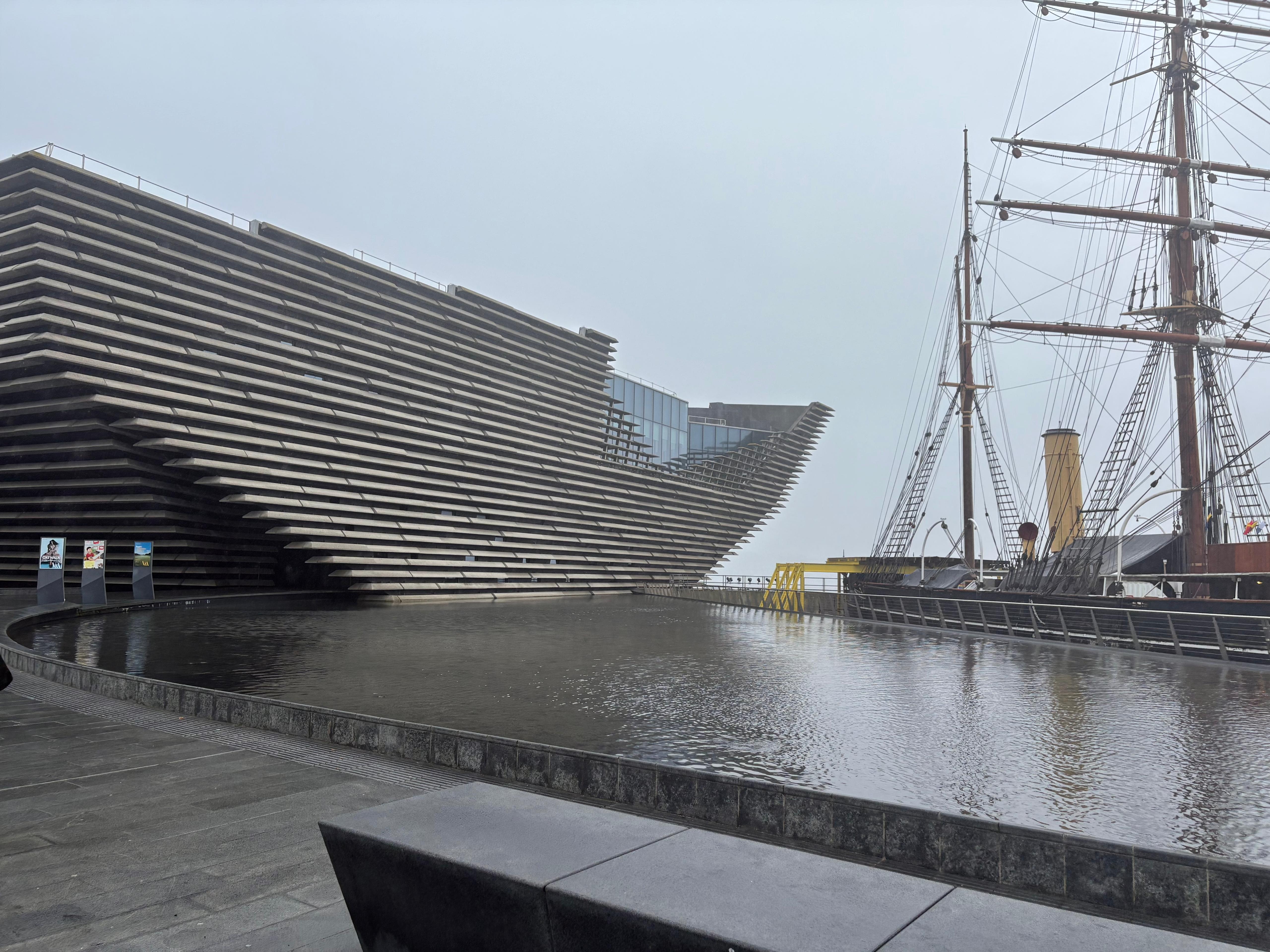
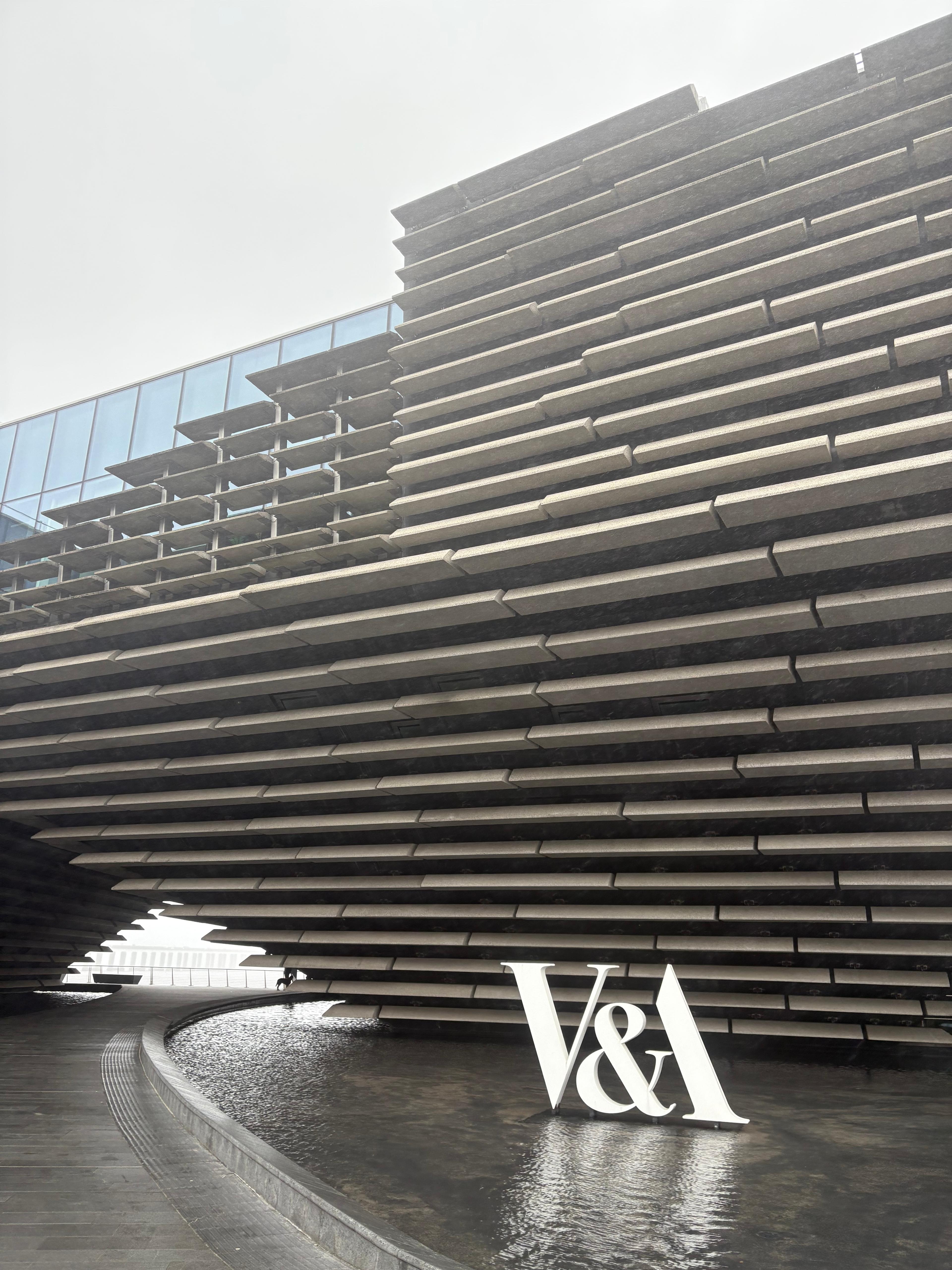
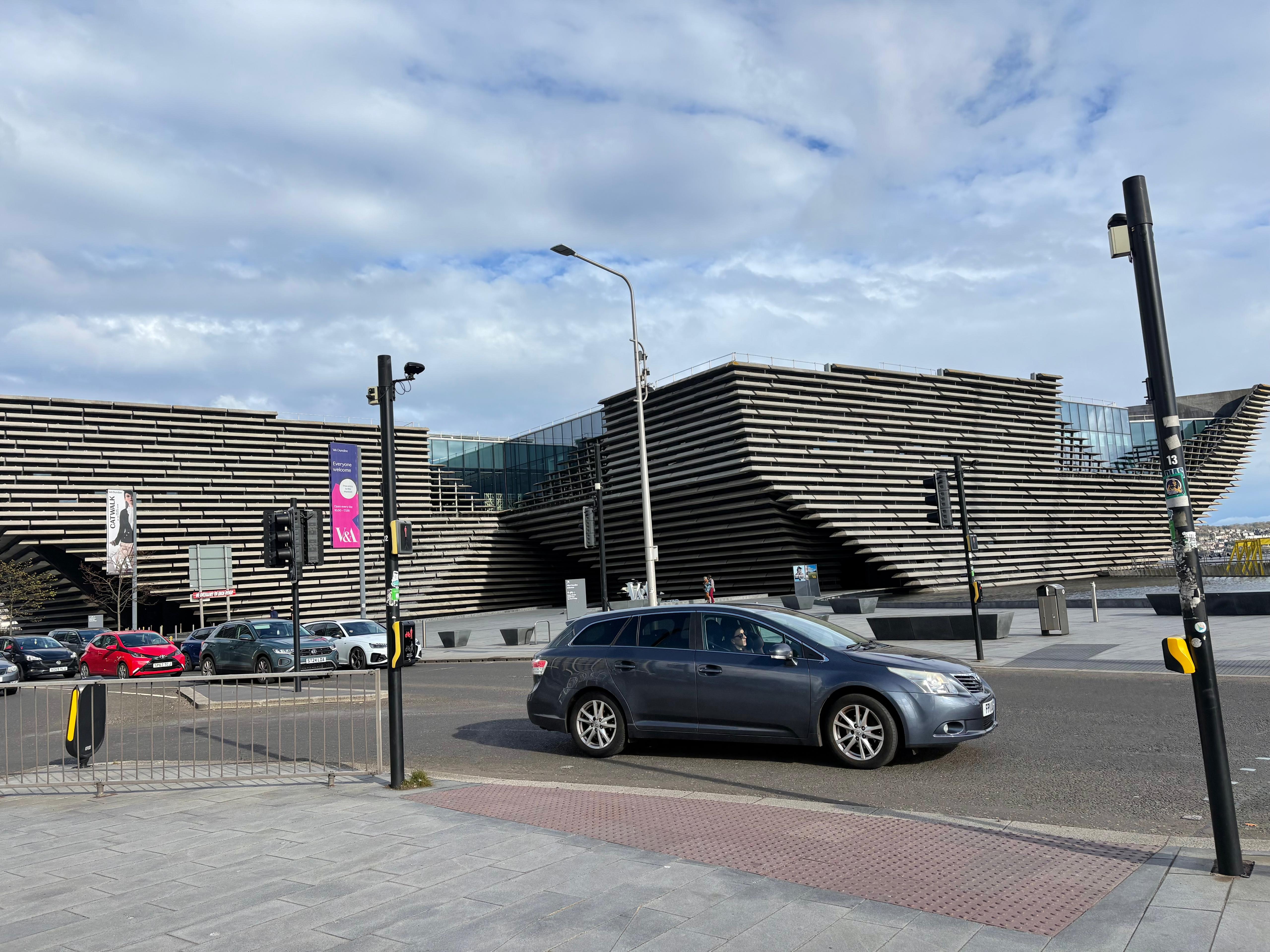
Set against the shifting edge of the River Tay, the museum does not arrive as an object placed upon the waterfront. It emerges, fragmented and tectonic, as though lifted from the geological memory of Scotland itself. In this sense, Kuma does not design a building in Dundee; he reinterprets Dundee through material.
The Anti-Object Condition
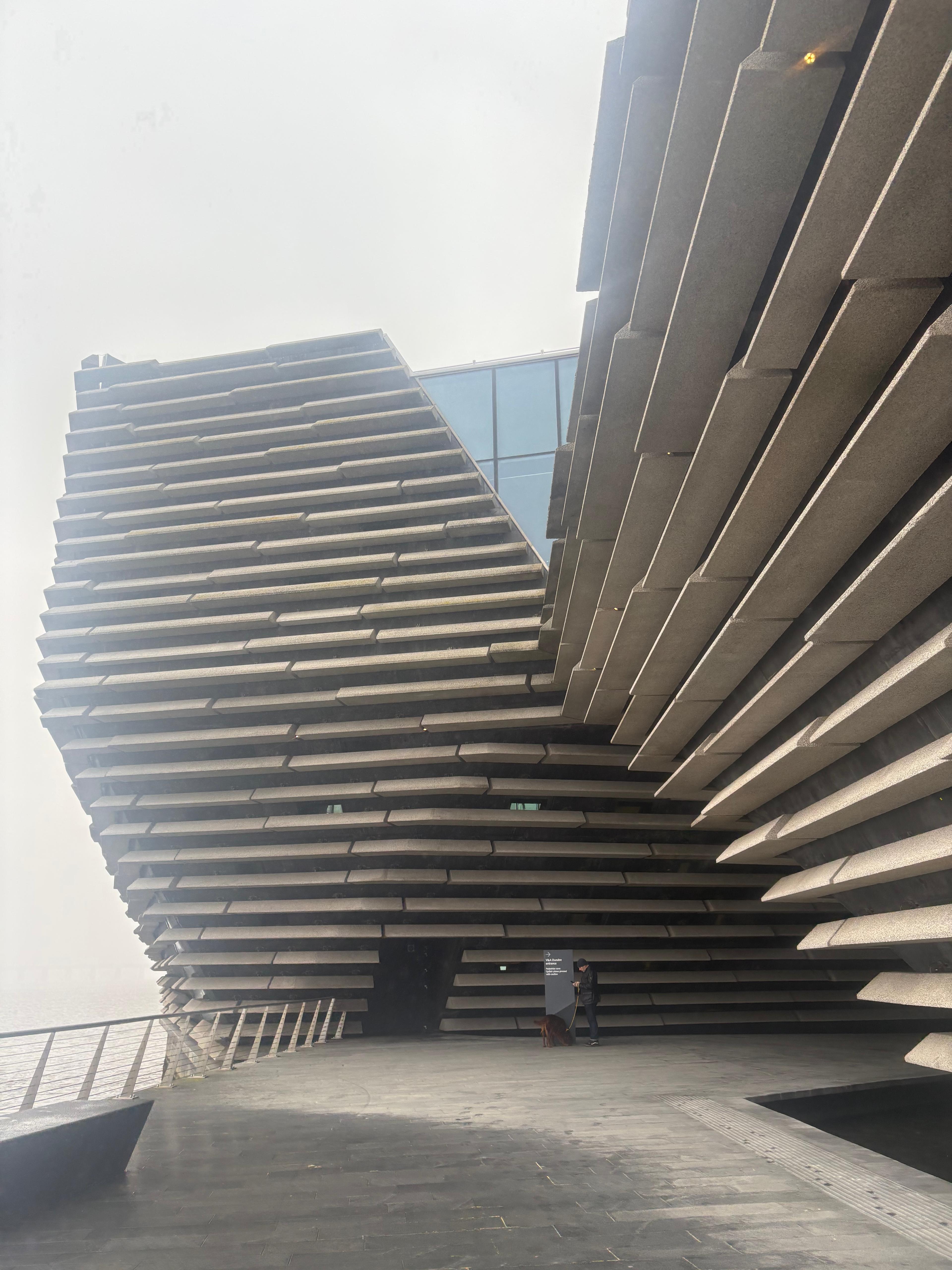
At first encounter, the building refuses legibility. Two primary volumes twist gently apart, creating a central void that is neither entrance nor courtyard in the conventional sense, but a spatial hesitation, a pause in the urban fabric. This gesture is not dramatic in the theatrical sense; it is quiet, almost restrained. Yet it fundamentally reorganises perception.
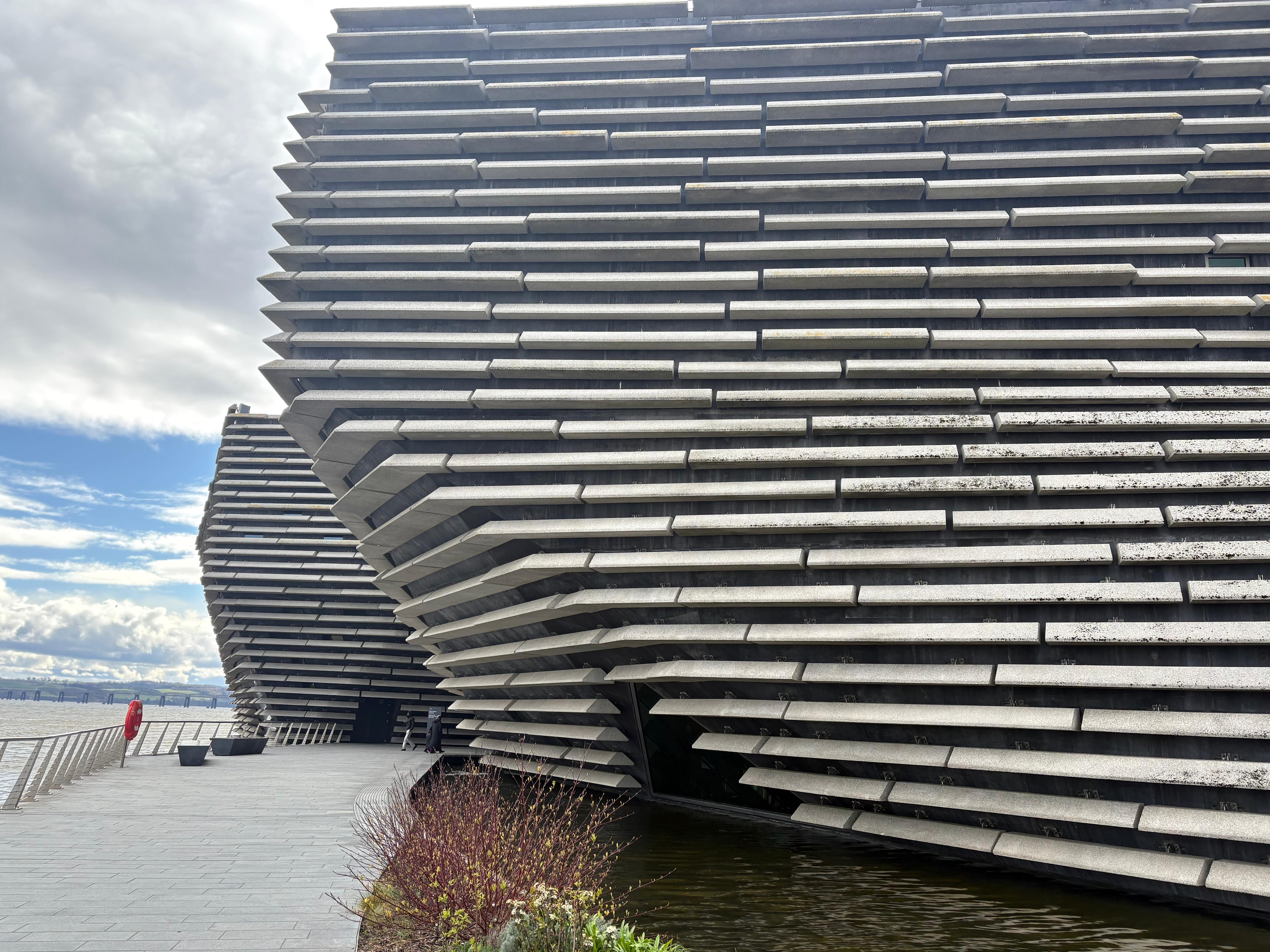
Kuma’s architecture consistently challenges the idea of the building as a singular object. Here, mass is deliberately broken down into layered fragments, resisting visual dominance. The result is a structure that behaves less like architecture and more like terrain, eroded, stratified, and in a constant state of becoming.
The void between the volumes acts as a contemporary threshold, recalling the symbolic power of a gate, yet without ornament or literal reference. It is space as transition, not destination.
Concrete as Geological Time
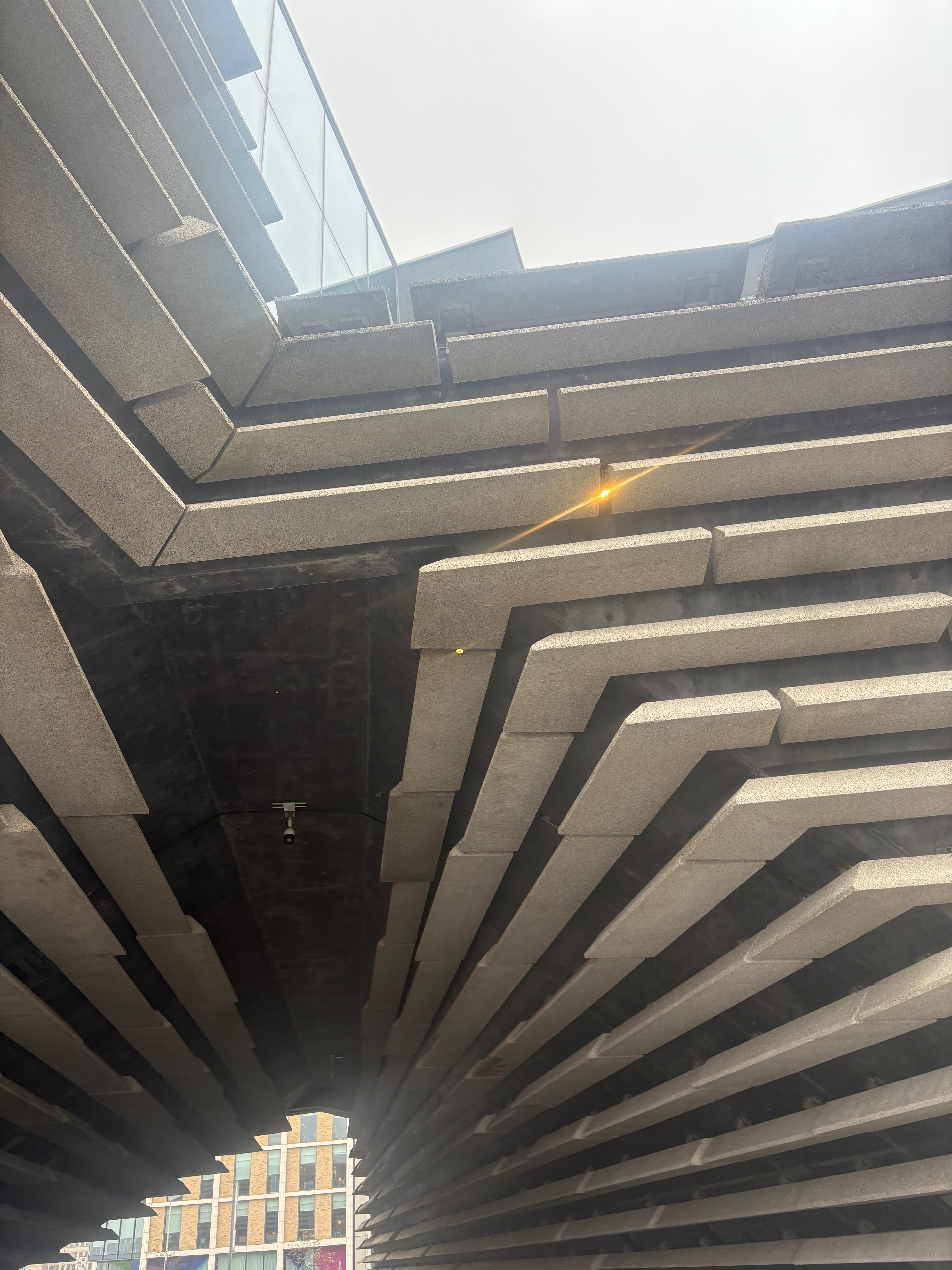
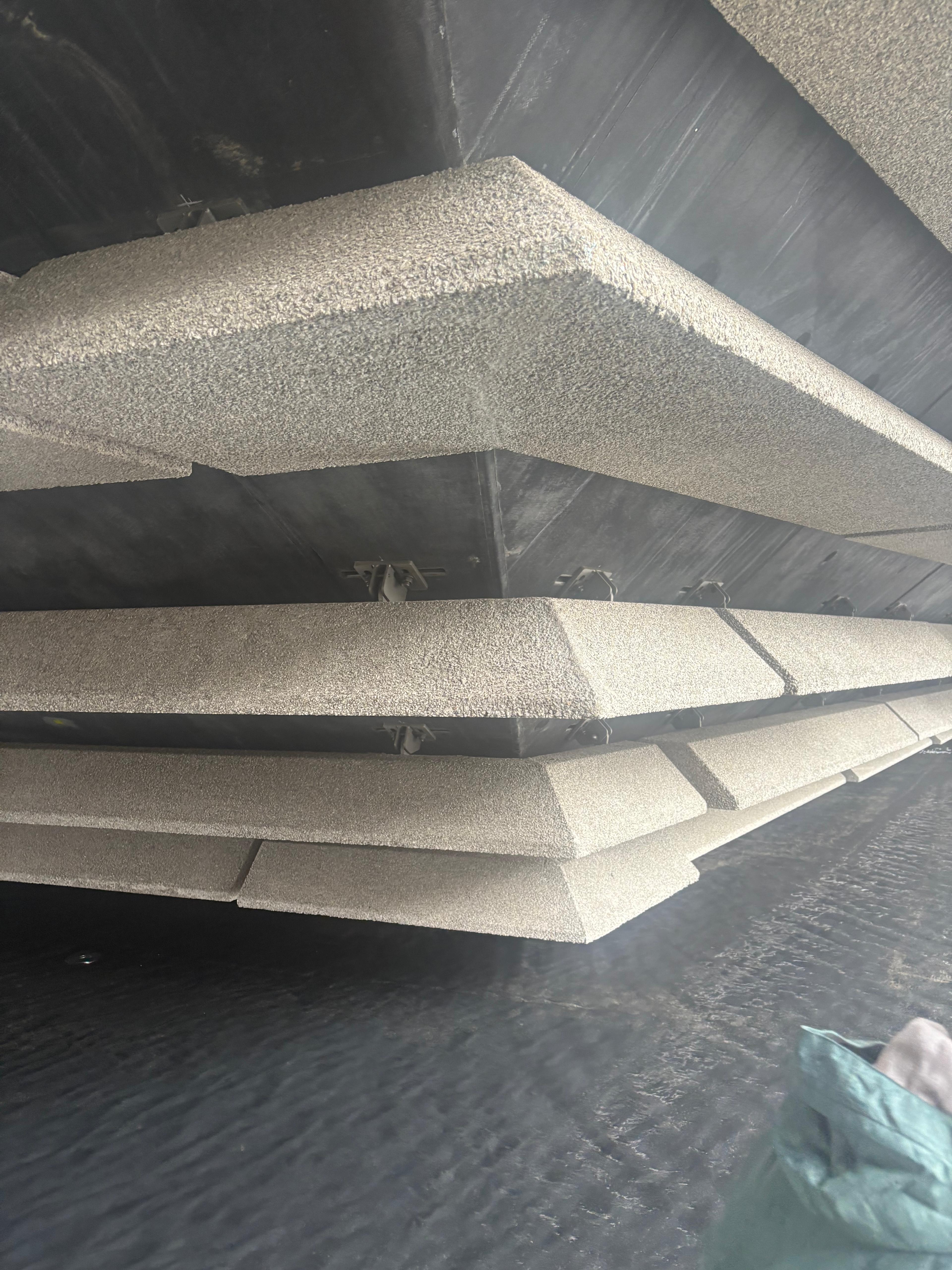
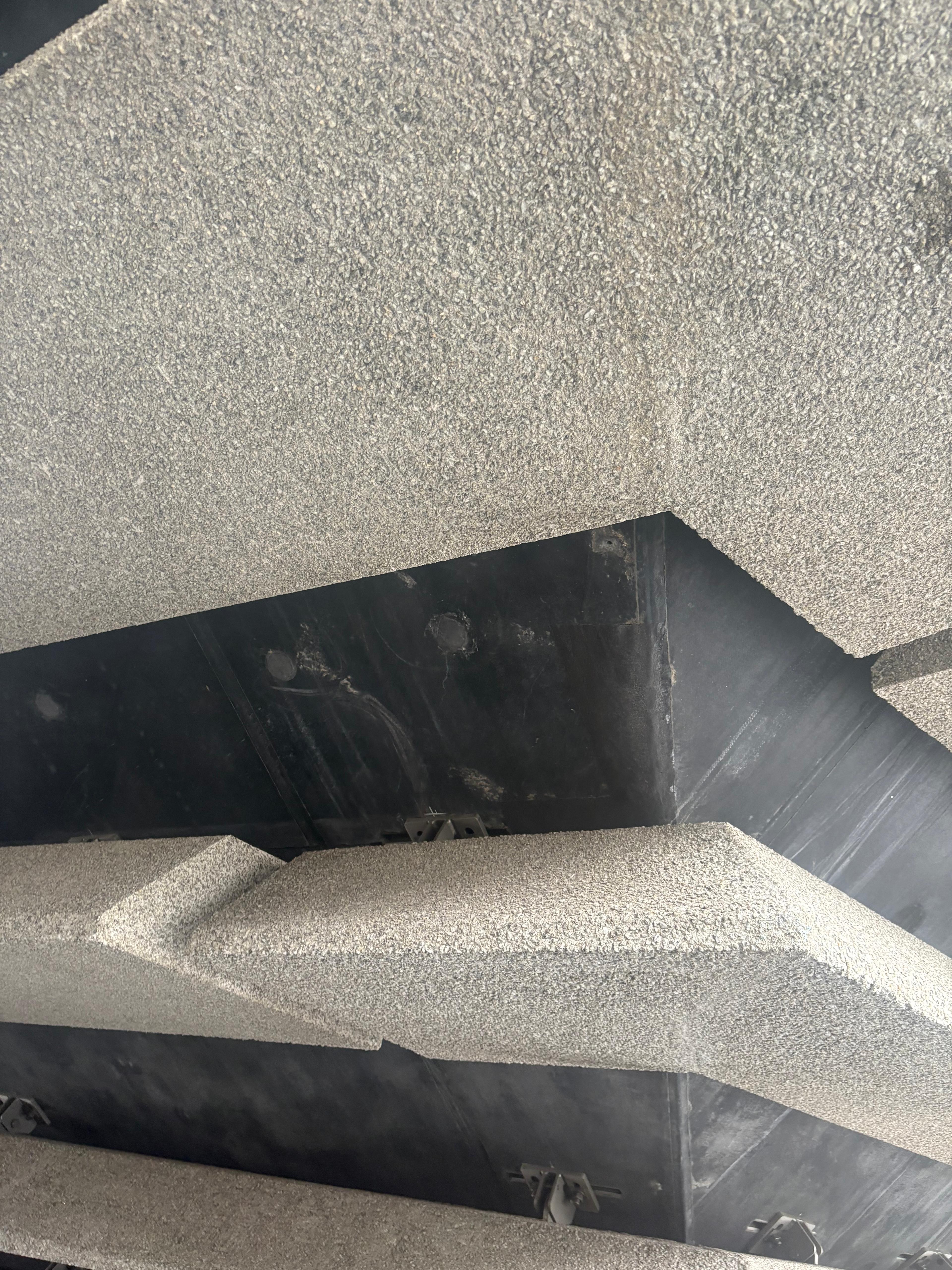
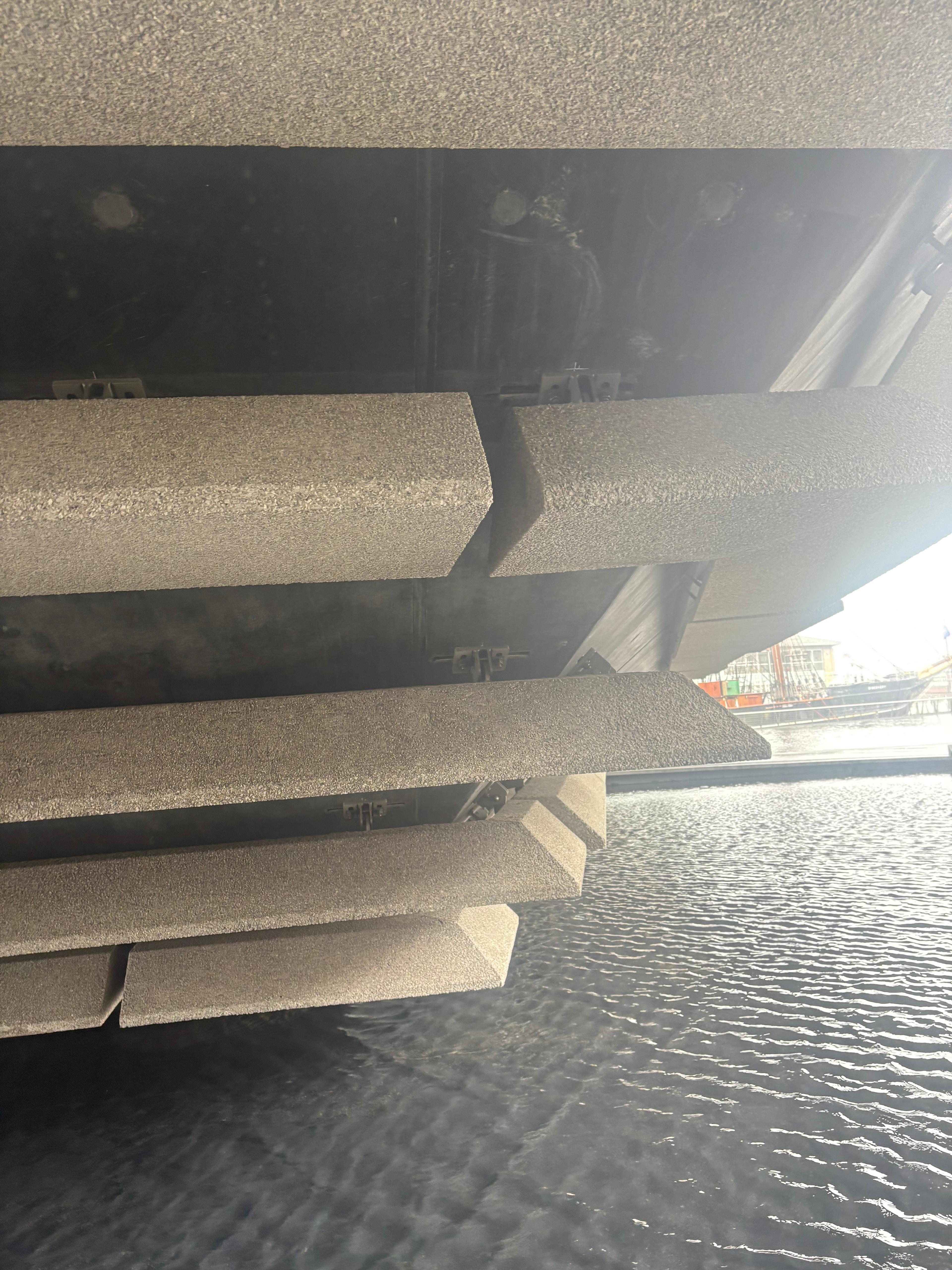
The most striking aspect of the V&A Dundee is its material intelligence. The façade is composed of thousands of precast concrete panels, each subtly varied, each contributing to a larger atmospheric whole. There is no attempt at smooth perfection. Instead, the surface behaves like stratified rock, irregular, sedimented, and deeply tactile.
This is not concrete as industrial repetition, but concrete as geological memory.
The horizontal layering of the façade evokes cliff formations along the Scottish coastline, where stone has been shaped over millennia by wind, salt, and pressure. Kuma translates this slow violence into architectural language. The building does not mimic nature; it internalises its processes.
Crucially, light becomes the activating force. On overcast days, the façade recedes into a monochrome heaviness, absorbing the sky. In brighter moments, it fractures light into subtle gradients of shadow and depth. The building never presents itself in a fixed state. It performs constantly, depending on weather, time, and distance.
The Discipline of Assembly
What appears at first as expressive fragmentation is, in fact, a highly disciplined system of assembly. Each panel is calibrated within a precise structural logic, revealing a tension between control and dissolution.
This duality is central to Kuma’s practice. The architecture is neither purely intuitive nor purely rational, it exists in the unstable territory between the two. Repetition generates rhythm, but variation prevents closure. The eye is never allowed to settle fully; it is always slightly displaced.
In this sense, the V&A Dundee can be read as a composition of controlled erosion , a building that is carefully constructed to appear as if it is slowly returning to landscape.
Interior Counterpoint: Warmth Against Weight
If the exterior is geological and heavy with temporal reference, the interior offers a deliberate counterpoint. Here, timber replaces concrete, shifting the atmosphere from erosion to intimacy.
The internal surfaces are defined by layered wooden slats that curve and fold, guiding movement with a soft continuity. Light is no longer fractured but diffused, creating a spatial calm that feels almost suspended.
This transition is not simply material contrast, it is emotional calibration. From outside to inside, the visitor moves from landscape to dwelling, from collective memory to individual experience.
The interior does not negate the exterior; it completes it. The heaviness of stone is answered by the warmth of wood, forming a dialogue between endurance and care.
The Waterfront as Active Edge
The relationship between the building and the River Tay is not passive. The museum actively reshapes the waterfront into a civic threshold. It does not sit beside the river; it negotiates with it.
The central opening frames movement between city and water, functioning as a spatial device that draws the eye outward while pulling the body inward. This dual orientation creates a constant tension, inward reflection balanced against outward exposure.
In doing so, the building restores the waterfront as a place of passage rather than a boundary. It becomes a civic instrument, not just a cultural container.
Conclusion: Architecture as Slow Dissolution
The V&A Dundee resists the clarity of iconic architecture. It does not seek to be instantly consumed or easily summarised. Instead, it operates through ambiguity through shifting perceptions of mass, light, and material.
In Kuma’s work, architecture is never final. It is always in a state of soft dissolution, as if resisting the permanence it inevitably must assume.
Perhaps this is the quiet power of the V&A Dundee: it does not assert itself as an object of authority, but as a condition of atmosphere, a building that feels less constructed than unearthed.
In its concrete folds, we read landscape.
In its voids, we read silence.
And in its material depth, we read time itself.
Interesting Facts
The project was delivered in collaboration with PiM.studio Architects (Maurizio Mucciola), Arup (engineering), and BAM Construct
Concrete Composition: The panels themselves are created from a mix of stone, cement, and reinforcement mesh.
Stainless Steel Anchors: The panels are attached to the walls using a series of specialized brackets and serrated anchor channels.
.jpeg)
.jpeg)


.jpeg)


.jpeg)


.jpeg)


.jpg)


.jpeg)


