


.svg)
.svg)


There are figures in design who do not simply create objects, but fundamentally change the way we see the world. Alessandro Mendini, the renowned Milanese architect and designer who passed away in 2019 at the age of 87, belongs to this rare and essential category.
His work cannot be confined within disciplinary boundaries such as design, architecture, or art. Everything dissolves into a broader language where colour becomes thought and ornament becomes a critical position.
For me, encountering Mendini, a pivotal figure in the development of modern Italian design, has never been a purely theoretical exercise. It has been, and continues to be, a profound perceptual experience: a quiet shock that reawakens the possibility of colour as a structural emotion.
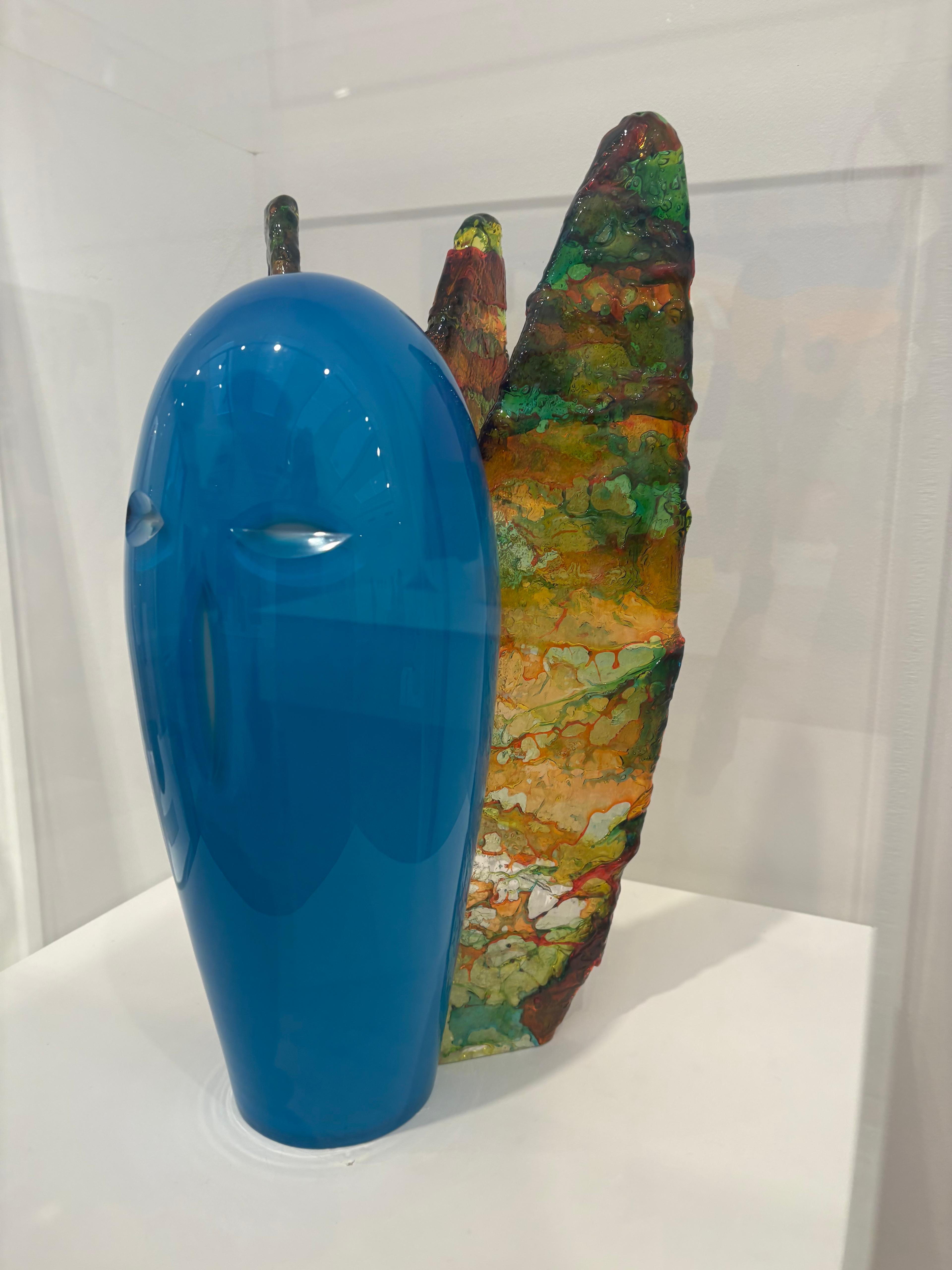
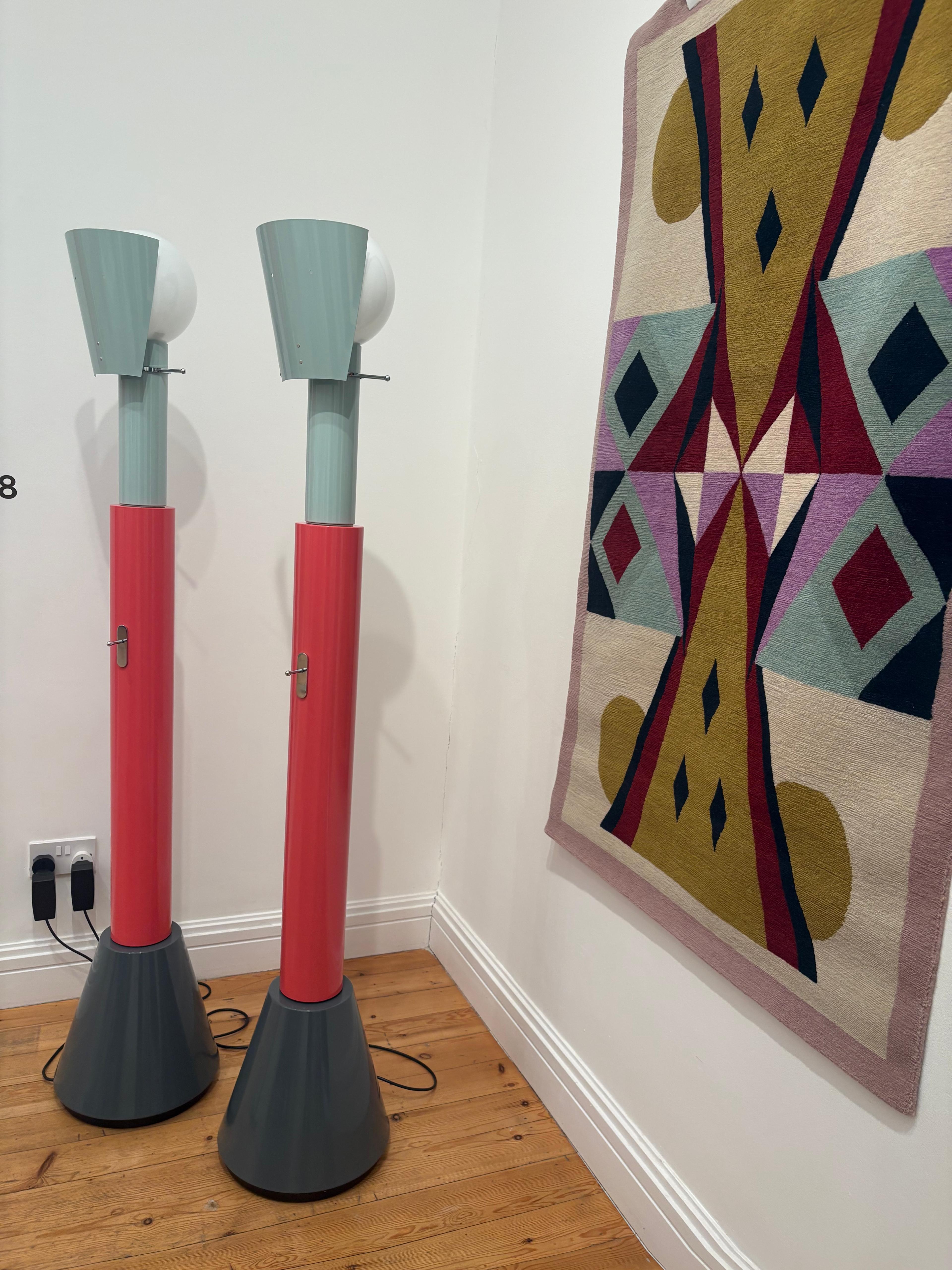
In Mendini’s work, recently celebrated in London at the Estorick Collection of Modern Italian Art in an exhibition running from 16 January to 10 May, colour is never surface. It is an invisible structure. It does not accompany form; it generates it. It does not decorate; it defines.
A chair is never merely a chair. It becomes a psychological landscape. A domestic object transforms into a narrative fragment, charged with irony, fragility, and tension.
What strikes me most is his complete rejection of neutrality. In Mendini’s universe, there is no chromatic subtraction. Every colour is an ethical and emotional choice. Every contrast is a statement about how we perceive reality.
As both an architect and an artist, this has deeply influenced my own work. It reinforced the idea that colour is never a final intervention but an original condition of the project itself. It is an invisible structure that precedes form and guides it.
Mendini reintroduced ornament at a historical moment when it had been dismissed as superfluous, almost guilty. Yet his gesture was not nostalgic. It was not a return to decoration as a language of the past.
Rather, it was an act of cultural resistance.
In Mendini’s work, ornament is ironic, self aware, and at times deliberately unsettling. It does not seek harmony but friction. It does not pursue purity but ambiguity. Within this tension, a new space emerges: one where design no longer needs to justify itself solely through function, but can exist as an autonomous emotional experience.
This is where his thinking becomes fundamental for me: the possibility that complexity does not need to be simplified in order to be legitimate.
Mendini’s colour combinations are never accidental. They are unstable emotional systems. A pink collides with a deep blue. A pattern rejects hierarchy. A surface refuses to settle into a single interpretation. Everything is constructed to generate a state of perceptual oscillation.
It is precisely within this instability that a narrative field opens, one that does not pass through rational language but through sensory memory. Every colour combination becomes a fragment of experience, something we recognise without being able to fully explain.
Mendini restores to objects an almost human quality: presence.
A chair seems to observe the room. A surface becomes insistent, almost declarative. The object ceases to be neutral and becomes an interlocutor.
This transformation offers a fundamental lesson for architecture as well: space should not merely be inhabitable. It should be emotionally active.
In my work at Natalia Giacomino Architects, this idea constantly returns. Architecture becomes a field of perceptual intensity rather than a neutral container.
Mendini’s thinking opened a precise possibility within my practice: to consider colour as a spatial structure.
Not as an applied skin, but as a force capable of constructing rhythm, depth, and relationships. Colour becomes a form of invisible architecture, able to transform perception even before the built form is experienced.
This raises a continuous question:
What happens when colour no longer accompanies space, but generates it?
This is not an aesthetic question. It is a perceptual and emotional one. It concerns the way we move through environments, the way light becomes emotion, and the way memory is activated through chromatic matter.
Mendini never sought closure. And it is precisely in this choice that his radical strength resides.
His work remains open, suspended between irony and sincerity, between play and structure, between object and narrative. Within this unresolved space, colour becomes a form of freedom.
For me, this is perhaps his most important legacy: the possibility that design does not need to be silent in order to be serious.
It can be intense, contradictory, and emotional.
And within that unresolved intensity lies one of the most authentic forms of creative freedom.
Natalia Giacomino
Full Article in Italian
Ultima Edizione – La Notizia Londra
pag.16
.jpeg)
.jpeg)
.jpeg)
.jpeg)
.jpeg)
.jpeg)
.jpeg)
.jpeg)
.jpeg)


.jpeg)


.jpeg)


.jpeg)


.jpg)


.jpeg)


